Burswood Optus Stadium Bollards Case Study - Commercial Bollard System Overhaul And Compliance Upgrade
10 February 2026
10 February 2026
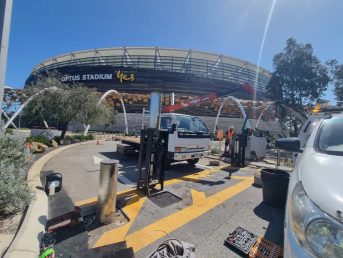
Optus Stadium relies on automated bollards to control pedestrian safety, vehicle movement, and service access across a high-traffic precinct. During event operations, bollards interact continuously with traffic lights, detectors, and control systems. Any fault, mis-sequencing, or non-compliant wiring increases operational and safety risk.
AGM Automation was engaged to assess and remediate the existing bollard systems following concerns around electrical compliance, control clarity, and unpredictable behaviour under load.
Traffic conditions at Optus Stadium change rapidly depending on event type, arrival windows, and service access requirements. Bollards must respond consistently to traffic signals and safety detectors across varying use patterns.
The existing installation showed control and wiring issues that increased the likelihood of unsafe activation and made fault-finding time-consuming for maintenance teams. The objective was to restore predictable behaviour and ensure compliance under real operating conditions.
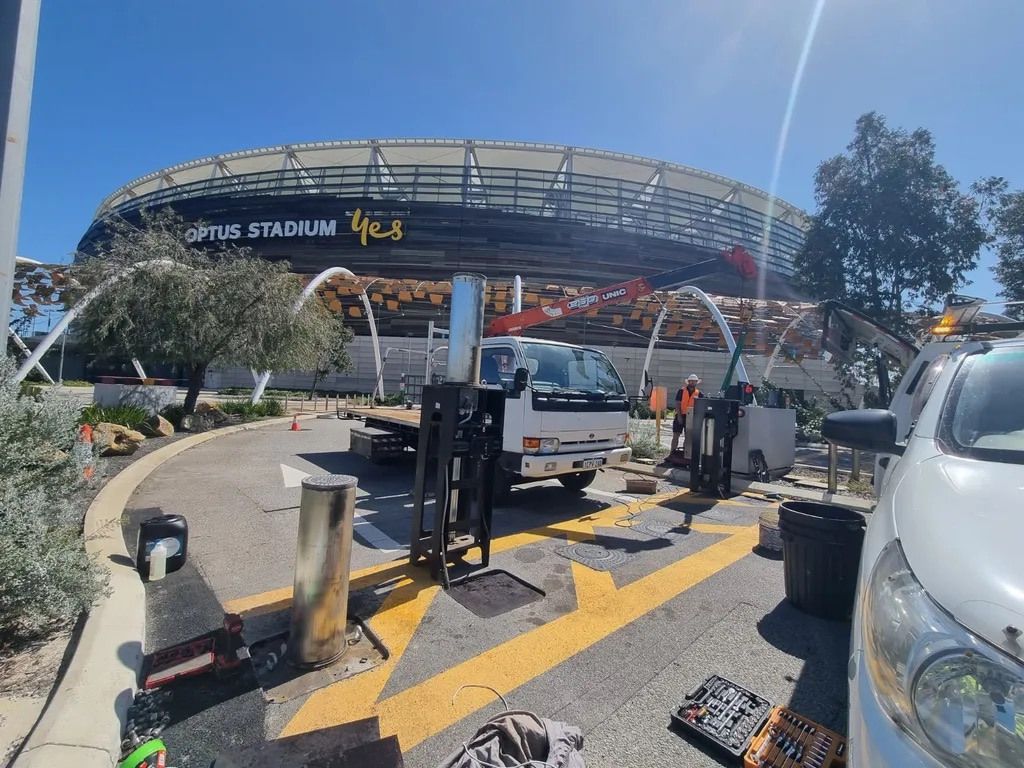
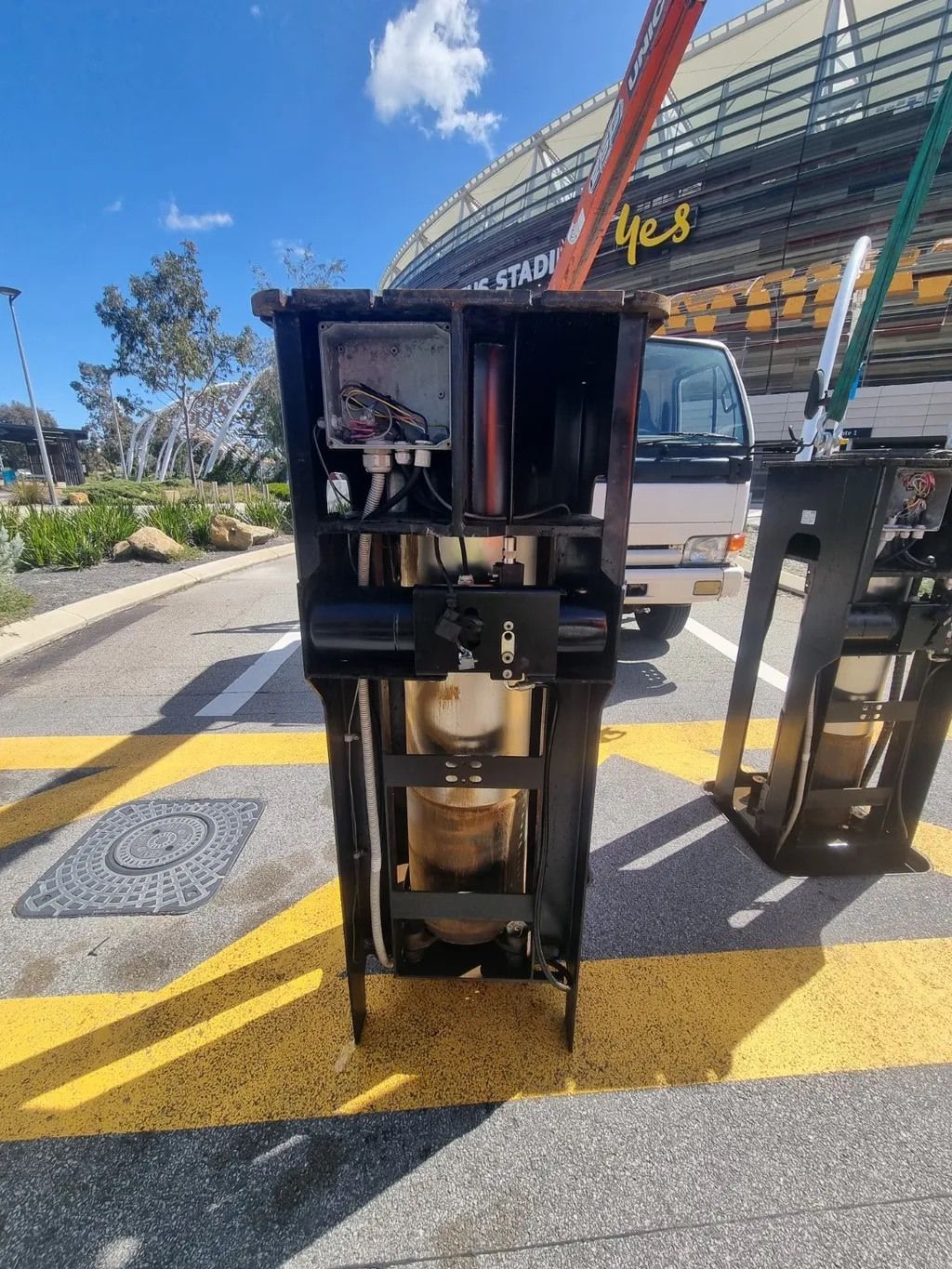
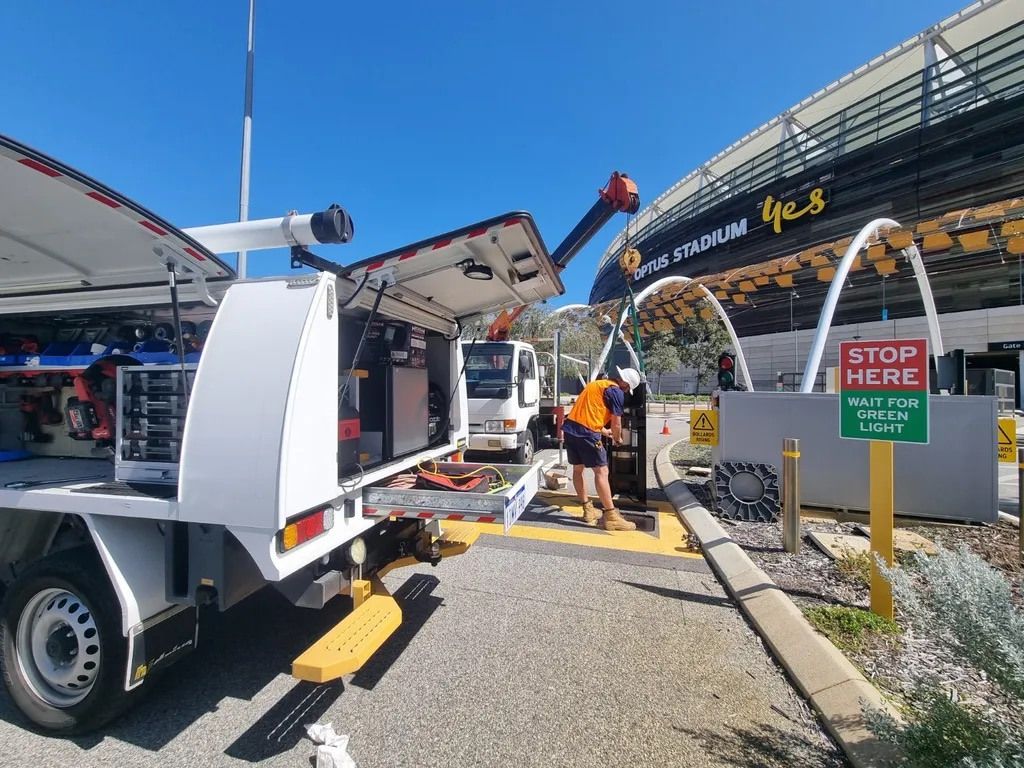
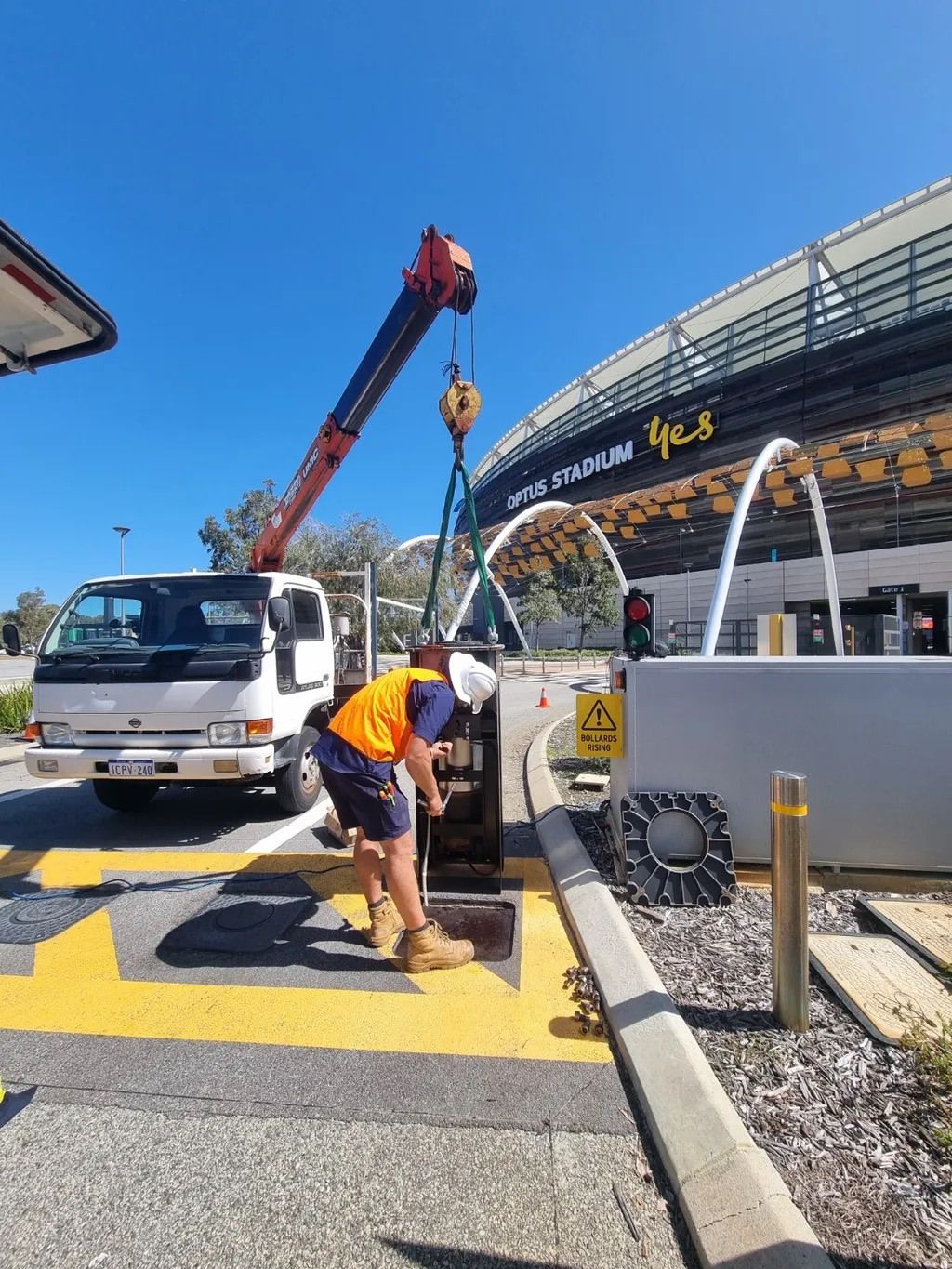
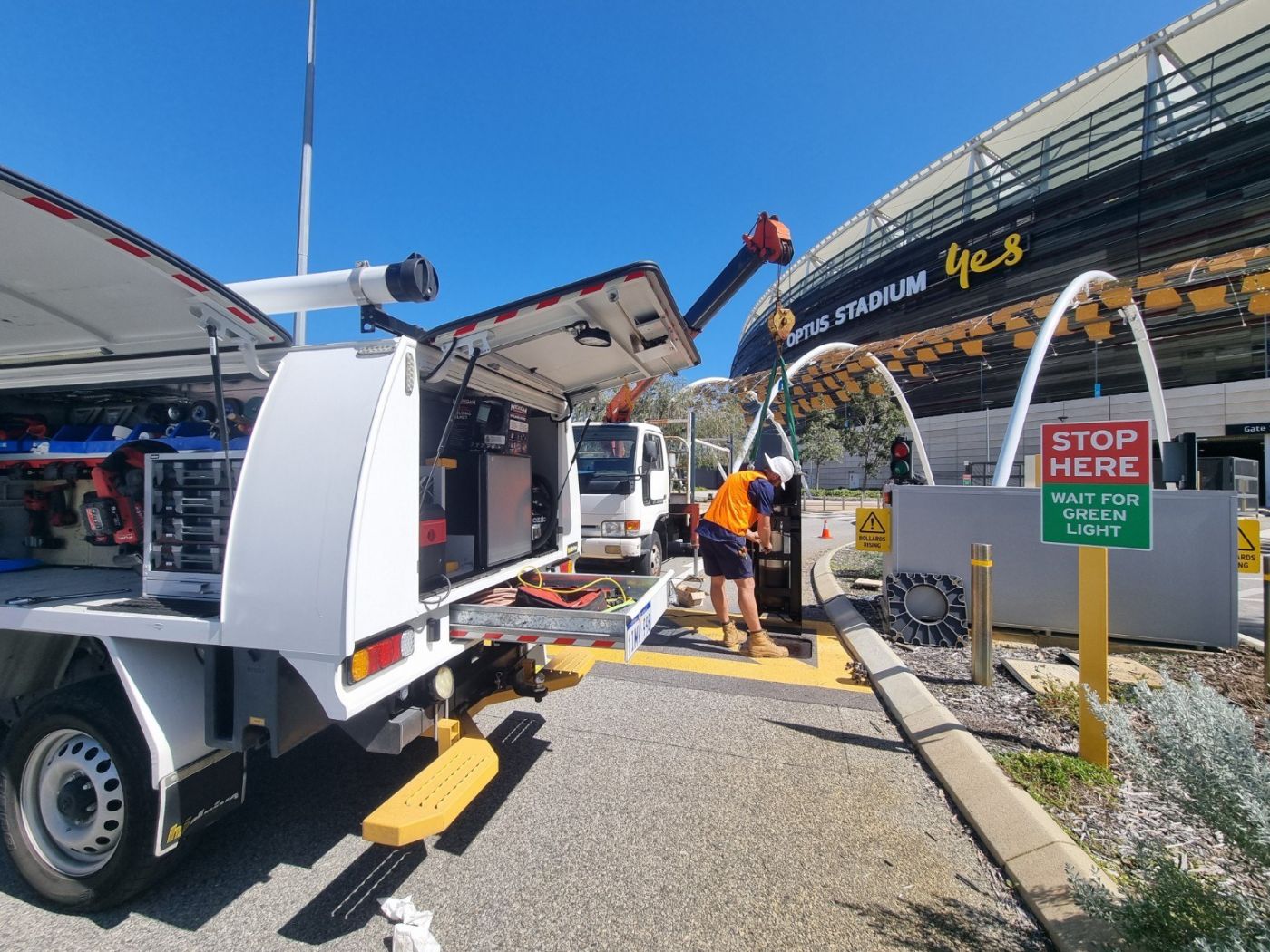
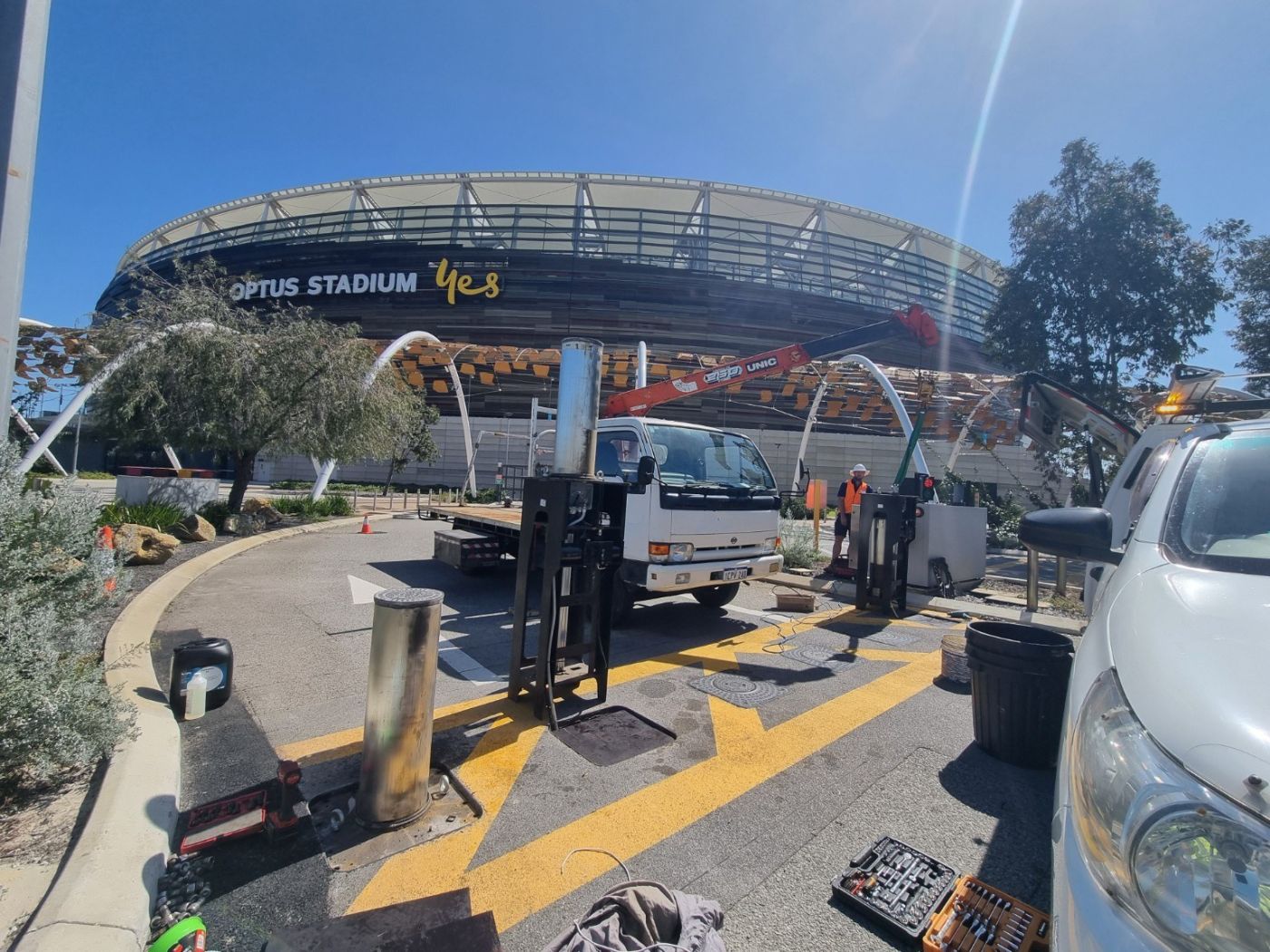
Following a detailed site assessment, AGM Automation completed a full electrical rewiring of all automated bollards to align with AS/NZS 3000 Electrical Wiring Rules.
This work removed identified compliance gaps and reduced the risk of defect notices or enforced shutdowns. The upgraded electrical installation provides a stable base for ongoing operation during peak demand periods.
Control behaviour was addressed alongside electrical compliance. Bollard control boards were rewired using independent relays to separate system functions and prevent unintended interactions.
This restructuring ensured:
All control wiring was labelled and documented, reducing diagnostic time and simplifying future servicing.
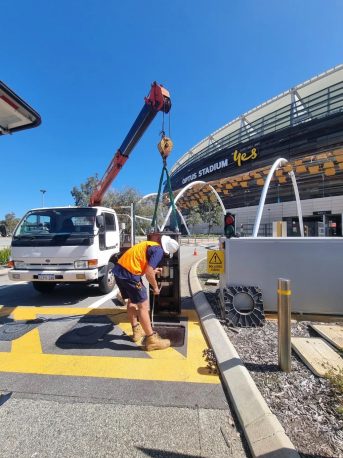
Full closure of access points was not feasible. Works were delivered in stages to maintain operational continuity.
Bollards within key internal traffic routes were upgraded first, addressing the highest-risk compliance and control issues while keeping primary movement paths operational.
Entry gate bollards were upgraded next to stabilise arrival conditions during peak ingress periods.
Exit gate systems were completed last to ensure controlled vehicle egress and correct interaction with traffic signalling.
The completed upgrade delivered the following outcomes:
Automated bollards at Optus Stadium now operate as an interlocked, standards-compliant system. Predictable behaviour has reduced operational risk, improved maintenance efficiency, and stabilised access control across a high-traffic environment.
AS/NZS 3000 compliance ensures automated bollards are electrically safe and legally compliant for use in public and high-traffic environments.
Non-compliant wiring increases the likelihood of unsafe behaviour, defect notices, and enforced shutdowns. In venues with high pedestrian and vehicle interaction, compliance is a baseline requirement for continued operation.
Poorly configured control systems can allow bollards to activate while vehicles are present or traffic signals permit movement.
This creates collision risk, vehicle damage, and unsafe conditions for operators and pedestrians. It also increases liability exposure for site owners and managers.
Independent relays separate control functions so faults remain isolated rather than affecting multiple system behaviours.
This separation ensures correct interlocking between bollards, traffic lights, and safety detectors, resulting in predictable and repeatable operation under load.
Independent relays separate control functions so faults remain isolated rather than affecting multiple system behaviours.
This separation ensures correct interlocking between bollards, traffic lights, and safety detectors, resulting in predictable and repeatable operation under load.
Yes. Automated bollard upgrades can be delivered in stages to maintain access and traffic flow.
Staged delivery allows safety and compliance issues to be addressed progressively while keeping critical entry, exit, and thoroughfare points operational.
Common indicators include recurring faults, inconsistent behaviour, unclear wiring layouts, or previous defect notices. Older installations and sites with evolving traffic patterns are more likely to require compliance remediation to maintain safe operation.
Clear labelling reduces fault-finding time and simplifies ongoing maintenance.
It allows technicians to identify control functions quickly and service the system safely without guesswork or unnecessary disruption.
Automated bollard upgrades should be managed by trade-led access control specialists with experience in high-traffic environments.
This ensures remediation addresses underlying control and compliance risks rather than temporary or surface-level faults.